Reading Breath by James Nestor as a Mother
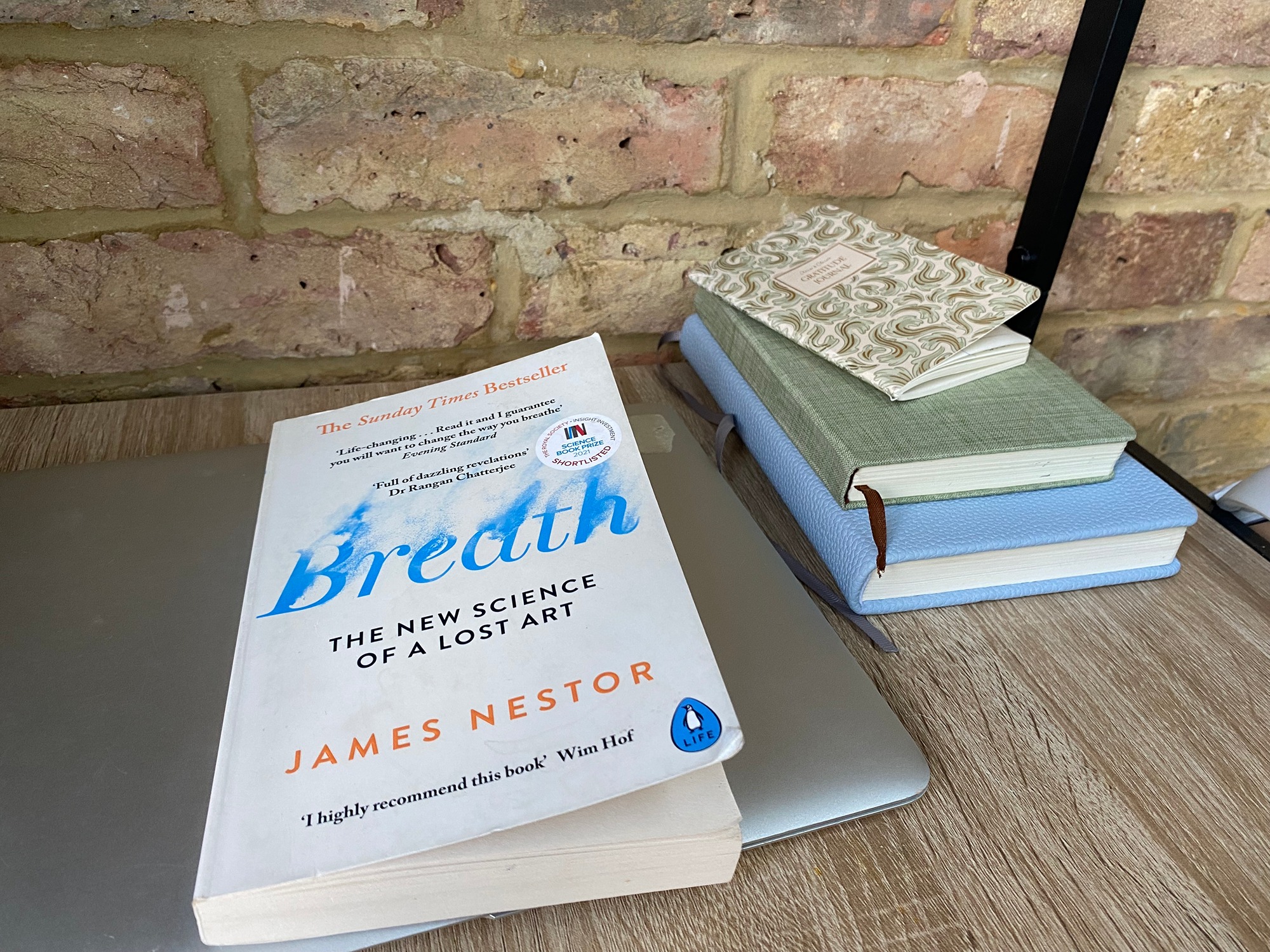
I first picked up Breath: The New Science of a Lost Art by James Nestor through my breathwork training. It’s a book that’s widely discussed in the breathwork world. Nestor explores how modern humans have lost some of our natural breathing habits and what that might mean for our health, from sleep and energy to stress and physical wellbeing. Reading it as a breathwork practitioner was interesting. But reading it as a mother was something else entirely. Because when you’re a parent, information rarely stays theoretical for long. It quickly becomes personal.
One of the parts of the book that really stayed with me was the discussion around nasal breathing. Nestor shares research suggesting that breathing through the nose supports better oxygen exchange, sleep quality, and overall regulation in the body. As someone who works with breath every day, none of that felt surprising. But as a mother, it made me think immediately about my own children. Like many families, we’ve navigated our fair share of blocked noses, mouth breathing, and restless sleep over the years. Things that can seem small on the surface but often tell a bigger story about what’s happening in the body. And that’s when breath stops being invisible.
When breath becomes personal
One of the parts of the book that really stayed with me was the discussion around nasal breathing. Nestor shares research suggesting that breathing through the nose supports better oxygen exchange, sleep quality, and overall regulation in the body. As someone who works with breath every day, none of that felt surprising. But as a mother, it made me think immediately about my own children. Like many families, we’ve navigated our fair share of blocked noses, mouth breathing, and restless sleep over the years. Things that can seem small on the surface but often tell a bigger story about what’s happening in the body. And that’s when breath stops being invisible.
When it’s your own child
One of the reasons this book landed so deeply for me is because breath has become a very real topic in our house. My son has struggled with nasal and sinus issues for a long time. What might appear from the outside to be something fairly minor, a blocked nose or difficulty breathing clearly through it, has actually been quite a long and sometimes exhausting journey behind the scenes. We’re currently under the care of the hospital while they investigate what’s going on, and like many parents navigating the healthcare system, it’s been a slow and sometimes arduous process. Appointments. Referrals. Waiting lists. Trying things. Waiting again. There’s often a lot of patience required when you’re trying to understand what’s happening in your child’s body. Reading Breath while we were already in the middle of this journey made me look at things with fresh curiosity. Not in a “this book has the answers” kind of way, but as a reminder of how foundational breathing really is. Because when nasal breathing is difficult, it can affect more than just the nose. It can influence sleep, energy levels, focus, and how settled the body feels overall.
Supporting him from different angles
Like many parents in this position, we’re approaching his situation from a few different angles. We’re continuing along the medical pathway through the hospital so we can understand what might be happening structurally and what support may be needed there. Alongside that, we’ve also explored some complementary support, including working with a holistic chiropractor who specialises in children. The intention isn’t to replace medical care, but to support his body more broadly, particularly around posture, airway space, and nervous system regulation. For me, it’s about holding both things at once. Trusting the expertise of medical professionals, while also staying curious about the ways we can support his body day to day. Parenting often looks like gathering information, asking questions, and slowly piecing together what feels right for your child.
Seeing breath differently
One of the quiet things that happens when you work with breath every day is that you start noticing it everywhere. In the way someone sighs when they sit down. In the rhythm of a sleeping child. In the shallow breathing that often shows up when someone is overwhelmed. Children, when they are deeply relaxed, often breathe beautifully. Their breath moves through the belly. It’s soft, steady, and unforced. But modern life doesn’t always support that. Allergies, busy schedules, screens, environmental factors, and even the way our jaws and faces develop can influence how easily a child breathes through their nose. These things shape breathing patterns more than we know. A quiet reminder Reading Breath didn’t suddenly give me a list of techniques or quick fixes. What it gave me instead was a reminder. A reminder that breath is something worth paying attention to. Not obsessively. Not anxiously. But gently. Because something we do around 25,000 times a day has the potential to influence how we sleep, how we regulate stress, and how our bodies feel overall.
Why this matters to me
As a breathwork facilitator, I spend a lot of time helping adults reconnect with their breath. But as a mother, I’m also very aware that our breathing patterns often begin early. The way we breathe when we sleep. The way we breathe when we’re calm. The way we breathe when we’re stressed. These patterns quietly shape how our nervous systems respond to the world which is why I work with children too. And sometimes the smallest things, like noticing how a child breathes, or supporting them to feel more settled in their body can make a meaningful difference over time, not to mention giving them the tools we’re learning in our 40s at the start of their lives. Breath is ordinary. But it’s also quietly extrao